ECTFE Tank Liners, ECTFE Valve Components & ECTFE Pipe Linings That Withstand HCl, H2SO4 and Chlorine – 20+ Years Service Life
Chemical Processing Solutions of ECTFE Lining
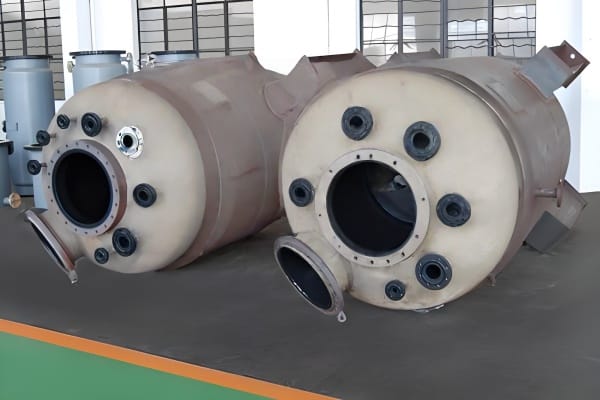
ECTFE Tank Lining Systems
Complete tank protection against aggressive chemicals including HCl, H2SO4, and chlorine compounds.
- Seamless welded construction
- Thickness: 2-10mm options
- Temperature range: -76°C to +150°C
- Prevents storage tank corrosion
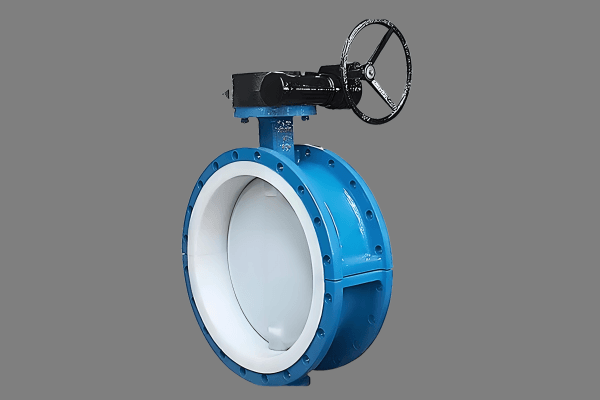
Halar Valve Seats & Components
Precision-machined ECTFE valve components for critical chemical processing applications.
- Superior wear resistance
- Dimensional stability
- Low friction coefficient
- Custom machining available
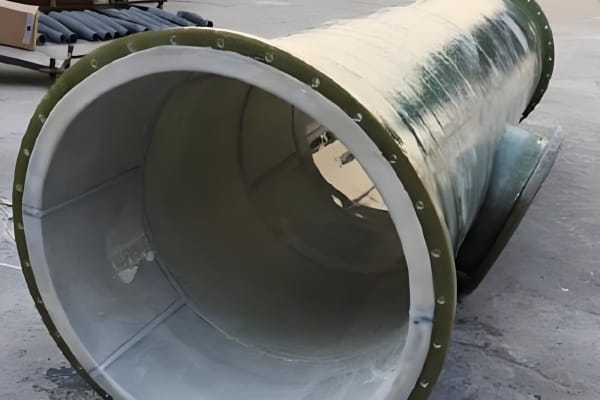
ECTFE Lined Pipe Systems
Corrosion-resistant pipe linings for sulfuric acid, hydrochloric acid, and other aggressive media.
- Smooth internal surface
- Reduced pressure drop
- Easy maintenance
- Long service life
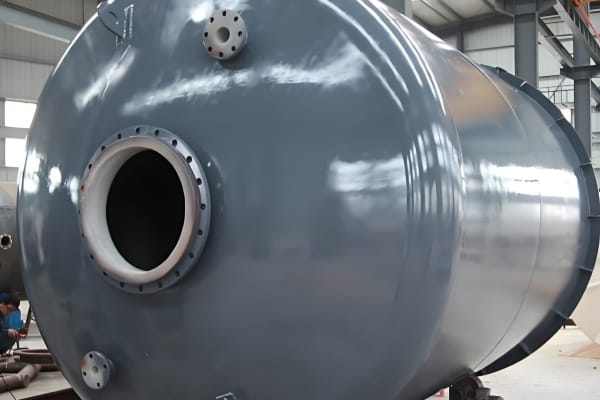
FRP Tank Repair Solutions
Repairing FRP tanks with ECTFE lining provides superior chemical resistance and extends service life.
- Quick installation process
- No hot work required
- Minimal downtime
- Cost-effective repair
Chemical Resistance & Compatibility Chart
ECTFE demonstrates excellent resistance to a wide range of aggressive chemicals commonly found in chemical processing plants.
| Chemical | Concentration | Temperature Limit | Recommended Product | Resistance Rating |
|---|---|---|---|---|
| Hydrochloric Acid (HCl) | 37% | 120°C | ECTFE Sheet 10mm | Excellent |
| Sulfuric Acid (H2SO4) | 98% | 100°C | ECTFE Lining 5mm | Excellent |
| Chlorine Gas (Cl2) | 100% | 80°C | ECTFE Sheet 6mm | Excellent |
| Sodium Hydroxide (NaOH) | 50% | 120°C | ECTFE Lining 8mm | Excellent |
| Nitric Acid (HNO3) | 70% | 80°C | ECTFE Sheet 10mm | Good |
| Phosphoric Acid (H3PO4) | 85% | 120°C | ECTFE Lining 6mm | Excellent |
| Acetic Acid | 100% | 100°C | ECTFE Sheet 5mm | Excellent |
| Methanol | 100% | 120°C | ECTFE Lining 4mm | Excellent |
| Toluene | 100% | 80°C | ECTFE Sheet 8mm | Good |
| Hydrogen Peroxide | 30% | 60°C | ECTFE Lining 6mm | Excellent |
Resistance Rating Legend:
Engineering Case Study: Saving $280k/yr on Titanium Replacement Parts
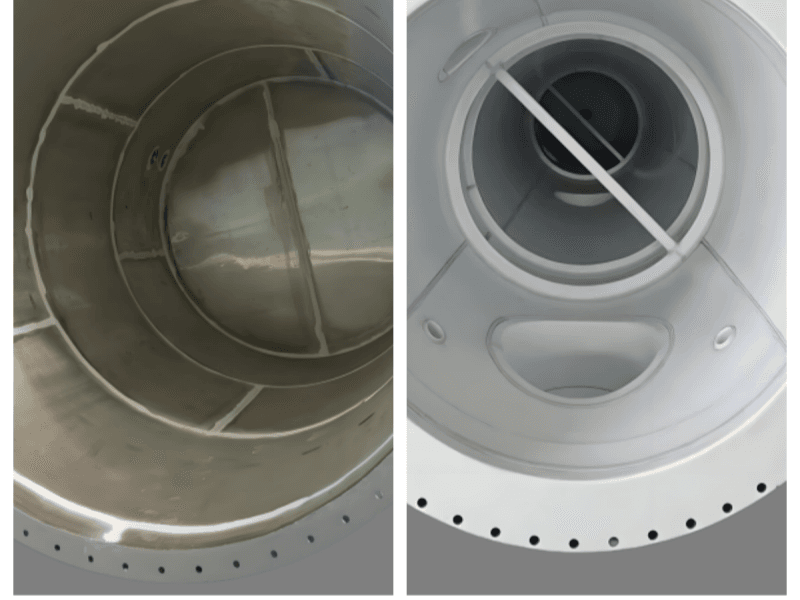
Project Overview
The Challenge
A major chemical processing facility was experiencing frequent failures of titanium valve seats and reactor vessel components when handling 37% hydrochloric acid at elevated temperatures. The annual replacement cost exceeded $280,000, with significant production downtime.
ECTFE Solution Implementation
- Phase 1: Reactor vessel lined with 10mm ECTFE sheets
- Phase 2: Valve components replaced with Halar ECTFE seats
- Phase 3: Process piping upgraded with ECTFE lined pipes
- Phase 4: Comprehensive system testing and validation
Results & Benefits
"The ECTFE lining system has completely transformed our operations. We've eliminated the constant worry about component failures and achieved significant cost savings. The installation was smooth, and the performance has exceeded our expectations."- Plant Manager, Specialty Chemicals Division
ECTFE Lining Technical Specifications
Physical Properties
| Density | 1.68 g/cm³ |
| Tensile Strength | 45 MPa |
| Elongation at Break | 200% |
| Flexural Modulus | 1400 MPa |
| Impact Strength | No Break |
Thermal Properties
| Service Temperature | -76°C to +150°C |
| Melting Point | 240-270°C |
| Thermal Conductivity | 0.16 W/m·K |
| Coefficient of Expansion | 8.1 × 10⁻⁵ /°C |
| Heat Deflection Temp | 71°C @ 1.8 MPa |
Chemical Properties
| Water Absorption | 0.01% |
| Chemical Resistance | Excellent |
| UV Resistance | Good |
| Permeability | Very Low |
| Stress Crack Resistance | Excellent |
Installation Specifications
| Minimum Thickness | 2mm |
| Maximum Thickness | 25mm |
| Welding Temperature | 300-350°C |
| Surface Preparation | Sa 2.5 Blast |
| Adhesion Strength | >2.5 MPa |
ECTFE Lining Installation Process
Surface Preparation
Thorough cleaning and blasting to Sa 2.5 standard. Surface profiling ensures optimal adhesion.
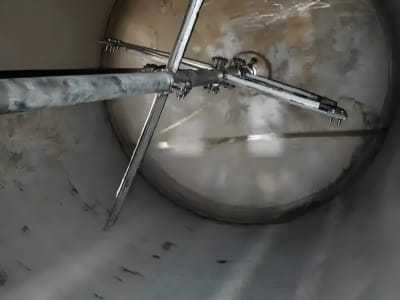
Primer Application
Specialized primer applied to enhance adhesion between substrate and ECTFE lining.
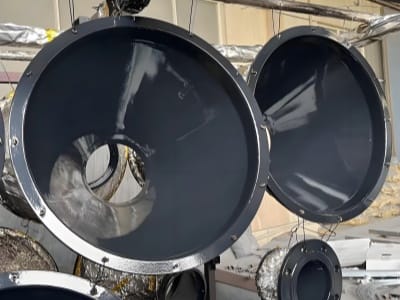
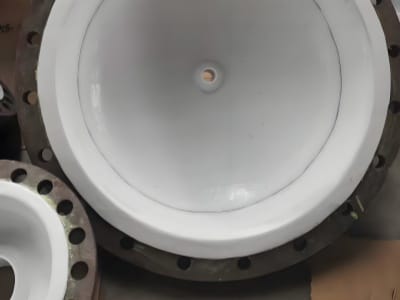
ECTFE Sheet Installation
Precision cutting and fitting of ECTFE sheets with proper overlap for welding.
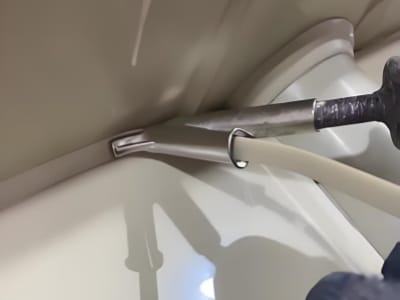
Welding & Sealing
Hot air welding creates seamless joints. All seams tested for integrity.
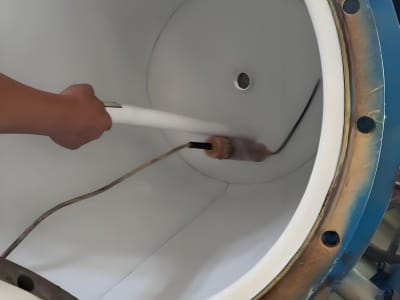
Quality Testing
Comprehensive testing including spark testing, vacuum testing, and visual inspection.
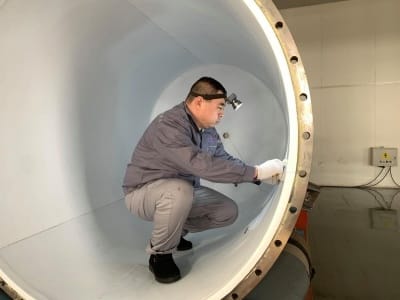
Final Inspection
Complete system validation and documentation. Certificate of compliance provided.
ECTFE vs Alternative Materials Cost Analysis
| Material | Initial Cost | Service Life | Maintenance | Total 20-Year Cost | Cost Advantage |
|---|---|---|---|---|---|
| ECTFE Lining | $50,000 | 20+ years | Minimal | $55,000 | Baseline |
| Titanium Components | $120,000 | 3-5 years | High | $480,000 | -773% |
| Hastelloy C-276 | $200,000 | 8-12 years | Medium | $350,000 | -536% |
| 316L Stainless Steel | $30,000 | 1-2 years | Very High | $300,000 | -445% |
| FRP Lining | $25,000 | 5-8 years | High | $125,000 | -127% |
Quality Assurance & Certifications

ISO 9001:2015
Quality Management System certified for consistent product quality and customer satisfaction.

ASME Compliance
Pressure vessel lining installations meet ASME Boiler and Pressure Vessel Code requirements.

NACE Standards
Corrosion control solutions designed according to NACE International standards.

API Specifications
Tank lining systems comply with API 650 and API 653 standards for storage tanks.
Our Quality Process
Material Testing
Every batch of ECTFE material undergoes comprehensive testing for chemical resistance, mechanical properties, and thermal stability.
Installation Monitoring
Certified technicians monitor every step of the installation process with documented quality checkpoints.
Performance Validation
Complete system testing including leak detection, adhesion testing, and chemical compatibility verification.
Long-term Support
Ongoing technical support and periodic inspections to ensure optimal performance throughout service life.
Frequently Asked Questions
How does ECTFE compare to PTFE for chemical processing applications?
+ECTFE offers superior mechanical strength and impact resistance compared to PTFE, making it ideal for high-stress applications. While PTFE has slightly better chemical resistance, ECTFE provides excellent resistance to most chemicals with better durability and easier installation.
What is the typical installation time for ECTFE tank lining?
+Installation time varies based on tank size and complexity. A typical 10,000-gallon tank can be lined in 3-5 days, including surface preparation, primer application, sheet installation, welding, and quality testing.
Can ECTFE lining be repaired if damaged?
+Yes, ECTFE lining can be easily repaired using patch welding techniques. Small damages can be repaired without draining the entire system, minimizing downtime and costs.
What warranty do you provide for ECTFE lining systems?
+We provide a comprehensive 10-year warranty on materials and workmanship, with extended warranties available based on specific application requirements and operating conditions.
Is ECTFE suitable for high-temperature applications?
+ECTFE can operate continuously at temperatures up to 150°C (302°F) and intermittently up to 175°C (347°F). For higher temperature applications, we recommend consulting our technical team for specific recommendations.