Melt-processable fluoropolymer introduction: The Need for Complex Shapes with Fluoropolymer Performance
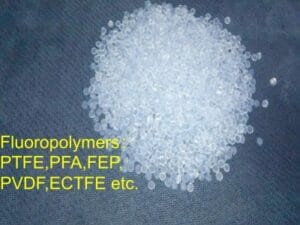
Selecting the optimal high-performance plastic is critical for engineers. Among the top contenders, FEP, PFA, and PTFE stand out as premier melt-processable fluoropolymers, each offering unique combinations of chemical resistance, thermal stability, and electrical properties. This guide cuts through the complexity, providing a clear, engineering-focused comparison to help you determine which melt-processable fluoropolymer is best suited for your specific design challenge.
PTFE is the gold standard for chemical and temperature resistance, but its inability to be melt-processed limits part design. This is where FEP (Fluorinated Ethylene Propylene) and PFA (Perfluoroalkoxy Alkane) come in. They offer a unique combination: they are truly melt-processable via extrusion or injection molding, yet retain most of PTFE’s superb properties. But how do you choose between them? This guide breaks down the critical differences to streamline your material selection process.
Melt-Processable Fluoropolymer 101: FEP, PFA, and PTFE Defined
FEP (Fluorinated Ethylene Propylene) – The Flexible Option
FEP is an excellent general-purpose fluoropolymer for applications where continuous service temperatures do not exceed 200°C (392°F). Its most notable feature is its exceptional optical clarity, making it ideal for sight glasses and fluid level indicators in corrosive environments. It also has a very low melt viscosity, which allows for easy processing and the production of thin, intricate parts. However, its lower temperature rating and mechanical strength compared to PFA are its main limitations.
PFA (Perfluoroalkoxy) – The High-Temperature All-Rounder
PFA is often described as “melt-processable PTFE” because its continuous service temperature of 260°C (500°F) matches that of PTFE. It possesses superior mechanical properties—including better stress crack resistance and creep resistance—than FEP. This makes PFA the preferred choice for heavy-duty chemical processing equipment, high-purity semiconductor components, and demanding mechanical parts that must perform reliably at elevated temperatures. The trade-off is a higher material cost and a higher processing temperature than FEP.
PTFE (Polytetrafluoroethylene) – The Performance Benchmark
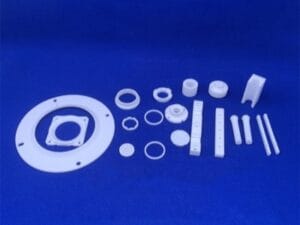
It’s crucial to remember that while FEP and PFA are melt-processable, PTFE remains the leader in certain areas. For applications requiring the absolute highest dielectric strength, the lowest coefficient of friction, or the ultimate chemical inertness, PTFE is unbeatable. Components are made not by melting, but by a unique process of cold compaction and sintering. This is ideal for manufacturing simple shapes like rods, sheets, tubes, and tape.
5 Key Decision Factors for Engineers
Use the following table to guide your initial selection.
Property | FEP | PFA | PTFE |
|---|---|---|---|
Max Continuous Temp | ~200°C | ~260°C | ~260°C |
Melt Processable | Yes (Easiest) | Yes | No (Sintered) |
Clarity | Excellent | Translucent to Opaque | Opaque |
Chemical Resistance | Excellent | Excellent | Exceptional |
Mechanical Strength | Good | Best | Fair (Subject to Creep) |
Relative Cost | $ | $$ | $ |
Real-World Application Scenarios
Choose FEP for: Transificant level gauges, laboratory tubing, and non-stick release films for packaging where high heat is not a factor.
Choose PFA for: Semiconductor wafer carriers, chemical tank liners, high-temperature wire jacketing, and complex injection-molded valve components.
Choose PTFE for: Machined seals and gaskets for extreme chemical service, non-stick coatings for cookware, and high-frequency circuit boards.
Conclusion: Matching Material to Mission
There is no single “best” material. The choice is a function of your application’s requirements.
If you need optical clarity and easy processing for temperatures up to 200°C, FEP is your answer.
If you need the highest temperature performance and strength in a complex, molded part, PFA is the superior choice.
If your design allows for a simple shape and demands the ultimate in performance (or lowest cost for simple forms), PTFE remains the benchmark.
Still unsure which melt-processable fluoropolymer is right for your component? Send our engineering team your CAD drawing and operating parameters for a free, expert recommendation.